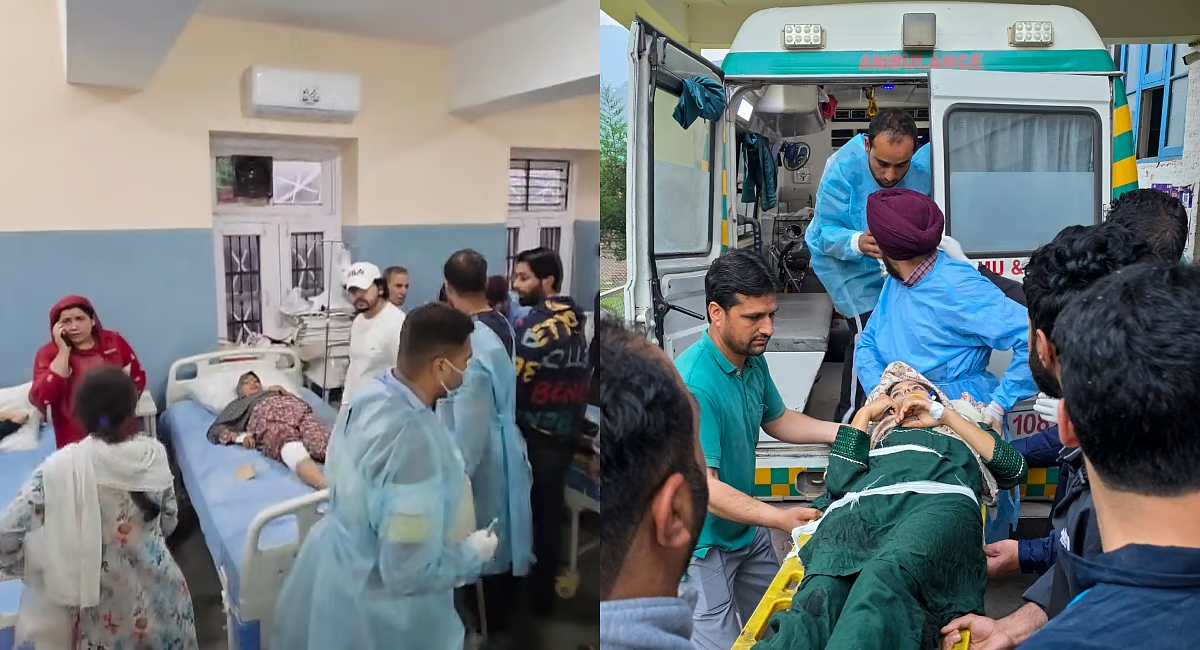



After a deadly terrorist attack in Pahalgam, Jammu and Kashmir, the Indian Armed Forces launched a midnight operation called Operation Sindoor. According to a statement from the Indian Defence Minister around 2 a.m. on May 7, the strikes targeted terrorist bases located in Pakistan and areas of Jammu and Kashmir under Pakistan’s control. These locations were thought to be used for preparing and carrying out attacks on India.
Later, Pakistan’s Deputy Prime Minister and Foreign Minister, Muhammad Ishaq Dar, confirmed some of the locations hit—such as Muridke, Bahawalpur, Kotli, and Muzaffarabad—along with five other spots in Pakistan-occupied Jammu and Kashmir.
He also reported that eight civilians were killed and 35 others were injured during the strikes, with the most casualties occurring in Ahmedpur East, a city in Bahawalpur district.
ALSO READ: May 7: Odisha Schedules Statewide Mock Drills at 12 Major Locations
Operation Sindoor: Why Were These Nine Locations Chosen?

India has long been tracking certain areas in Pakistan that are known for sheltering terrorist groups like Jaish-e-Mohammed (JeM), Lashkar-e-Taiba (LeT), and Hizbul Mujahideen.
As per a report from PTI quoting official sources, the Indian Air Force carried out focused airstrikes on several key camps connected to these groups. For JeM, targets included Markaz Subhan Allah in Bahawalpur, Sarjal in Tehra Kalan, Markaz Abbas in Kotli, and the Syedna Bilal camp in Muzaffarabad.
LeT bases such as Markaz Taiba in Muridke, Markaz Ahle Hadith in Barnala, and Shawai Nallah camp in Muzaffarabad were also hit. Meanwhile, for Hizbul Mujahideen, strikes focused on the Makaz Raheel Shahid camp in Kotli and Mehmoona Joya facility in Sialkot.
The report also highlighted the Pakistani Army and intelligence agency ISI’s involvement in supporting these 9 Terror camps, offering logistical help and military training through their Special Services Group (SSG).
Operation Sindoor: Details About the Targeted Locations

Bahawalpur (Punjab, Pakistan):
This city is home to JeM’s main headquarters, spread over 6.5 acres. It includes a religious school, military-style training areas, and accommodations for fighters. High-ranking JeM leaders like Masood Azhar and his close relatives reportedly live here. The site is believed to have played a role in major attacks, including the Pulwama bombing in 2019.
Markaz Taiba, Muridke:
Near Sheikhupura in Punjab, this LeT base was set up around 2000. It’s one of the group’s main training centres, with hundreds of recruits getting religious and combat training each year. It’s believed that some people linked to the 2008 Mumbai attacks received their training at this location.
Sarjal / Tehra Kalan (Narowal District):
This JeM launchpad operates from a local public health center close to the Indian border near Samba. It’s used for tunneling, drone coordination, and smuggling weapons and drugs into India.
Mehmoona Joya Facility, Sialkot:
Situated in the Head Marala area of Sialkot, this Hizbul Mujahideen base trains militants in weapons handling and guerrilla warfare. Around 20–25 fighters operate from here, reportedly crossing into Jammu and Kashmir for attacks.
Markaz Ahle Hadith, Barnala (PoK):
Located in Bhimber District of Pakistan-occupied Jammu and Kashmir, this LeT site supports militant movements across the border into areas like Poonch and Rajouri. It’s believed to host up to 150 fighters at a time.
Markaz Abbas, Kotli:
Also known as Markaz Saidna Hazrat Abbas Bin Abdul Mutalib, this JeM center can accommodate around 125 militants. Run by a top JeM commander, it’s a major launch site for cross-border infiltration operations.
Maskar Raheel Shahid, Kotli:
One of the oldest Hizbul Mujahideen training camps in PoJK, this site trains up to 200 people in advanced warfare, including sniper training and survival skills in rough terrain.
Shawai Nallah Camp, Muzaffarabad:
Also known as Bait-ul-Mujahideen, this LeT facility is near the Chelabandi Bridge on the Muzaffarabad–Neelum highway. It’s used for both training and launching missions into North Kashmir.
Markaz Syedna Bilal, Muzaffarabad:
Positioned across from Muzaffarabad’s Red Fort, this JeM site is a staging ground for militants entering Jammu and Kashmir. It’s said to house 50–100 fighters and receives support from Pakistan’s elite SSG forces. Known terrorists like Aashiq Nengroo and Abdullah Jehadi are believed to be active here.
Operation Sindoor: Execution and Impact
Operation Sindoor was meticulously planned and executed, with 24 precision missile strikes delivered in under half an hour. According to Indian sources, more than 70 terrorists were killed and over 60 wounded, severely degrading the operational strength of these groups.
The operation’s name, ‘Sindoor’-the red vermilion worn by married Hindu women-was a symbolic tribute to the widows of the Pahalgam attack, where terrorists deliberately left women alive to carry the message back to India. Families of the victims have expressed emotional support for the operation, viewing it as a just response to the atrocities committed.
Operation Sindoor: Pakistan’s Response
Pakistan’s government quickly condemned the strikes, calling them an “act of war” and claiming civilian casualties, including women and children. Pakistani officials reported at least nine civilian deaths and dozens of injuries, though India maintains that only terror infrastructure was targeted and that every effort was made to avoid civilian and military sites.
Pakistan also claimed to have shot down five Indian jets and taken several soldiers prisoner, though these assertions remain unverified by independent sources.

Operation Sindoor: Means for the Region
Operation Sindoor marks a significant escalation in India’s counter-terrorism strategy, demonstrating a willingness to strike deep inside hostile territory while carefully avoiding actions that could trigger a full-scale war. The operation has sent a clear message: India will not tolerate cross-border terrorism and will hold both perpetrators and their sponsors accountable.
The strikes have also exposed the extent of support provided by Pakistan’s state apparatus to terrorist groups, further isolating Islamabad diplomatically. However, the situation remains tense, with both countries on high alert and the international community urging restraint to prevent further escalation.
Operation Sindoor stands as a defining moment in India’s fight against terrorism. By targeting the core infrastructure of groups responsible for repeated attacks, India has not only delivered a powerful military blow but also a symbolic response to the pain inflicted on its citizens. While the operation has raised the risk of further conflict, it underscores India’s resolve to defend its people and dismantle the networks that threaten its security.
MUST READ: Nationwide Civilian Training Drills in 244 Districts Happening Tomorrow