


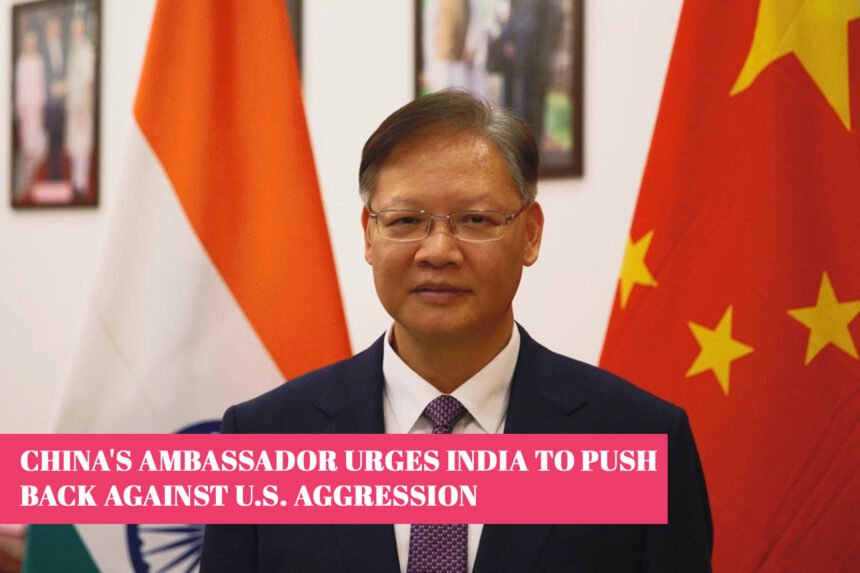
The “Liberation Day” in the United States has sparked a trade war that doesn’t involve weapons but has led to significant problems in the stock, bond, and currency markets, resulting in a loss of global wealth and China has firmly Push back against U.S. aggression tariff policies, drawing attention from around the world. Here’s why China has taken this stance.
The U.S. is using tariffs under the pretense of fairness, but this goes against World Trade Organization (WTO) rules and disrupts the global trading system. All nations, no matter their size, should be treated the same. The U.S. is acting unilaterally and using economic pressure to keep developing countries from advancing, forcing them to stay at the bottom of the global supply chain, working in low-paying jobs for wealthier nations.
To avoid direct conflict with the U.S., some nations decide to make concessions to earn support. However, history shows that giving in to the U.S. only encourages it to make more demands. The fall in the U.S. dollar’s value and the end of the Bretton Woods system point to possible risks. If the world allows the U.S. to continue its unfair tariff practices, we risk falling back into a severe economic crisis.
Within the vast timeline of human civilization, the U.S. is a relatively recent addition. It doesn’t represent the entire world. Once, it made up about 50% of the global GDP, but now that figure is around 26%. Its foreign trade accounts for only 13% of global trade, while the rest is shared among over 190 other countries, which have great potential for cooperation and can drive global economic growth.

The global economy involves contributions from multiple nations, not just the U.S. Major trade agreements like the Regional Comprehensive Economic Partnership (RCEP) and the Comprehensive and Progressive Agreement for Trans-Pacific Partnership (CPTPP) have been formed without U.S. involvement. If the U.S. continues to oppose the majority of countries that support free trade, it will lead to a world that is less influenced by America.
Since the start of the 21st century, developing countries have been rising in importance. For instance, BRICS nations now represent nearly half of the global population and a significant portion of world trade. Their impact on global economic growth surpasses the total contribution of the G7 nations.
China’s development is a result of its hard work, not gifts from other countries. It stands firm against unfair treatment. China’s strong response to U.S. tariffs is meant to protect its rights and support the global free trade system. Because of China’s stance, the U.S. had to pause its tariff threats for 90 days. Now, it’s up to the U.S. to decide how to proceed. China holds the view that trade wars benefit no one, and if the U.S. truly wants a solution, it should engage in respectful dialogue. If the achievements of China are due to its actions, not assistance from others.
China and India, both major developing nations, share a goal of growth and development. China is prioritizing high-quality development, whereas India is working towards its goal of ‘Viksit Bharat 2047.’ With populations exceeding a billion, both countries have the potential for a strong economic alliance.”
“The IMF forecasts that China and India will play a major role in global economic growth in the years ahead, exceeding the contributions of all G7 nations combined. “China is working to boost domestic demand and consumption, and it welcomes high-quality Indian products in its market. China follows WTO rules and will not engage in unfair competition or harm other countries’ economies.
The ongoing trade war has put the world at a critical point. At this important moment, we should work together to support multilateralism, uphold international rules, and protect the rights of developing countries, bringing much-needed stability to a chaotic world.
MUST READ: India and US Work Towards Bilateral Trade Pact Under Trump Administration