


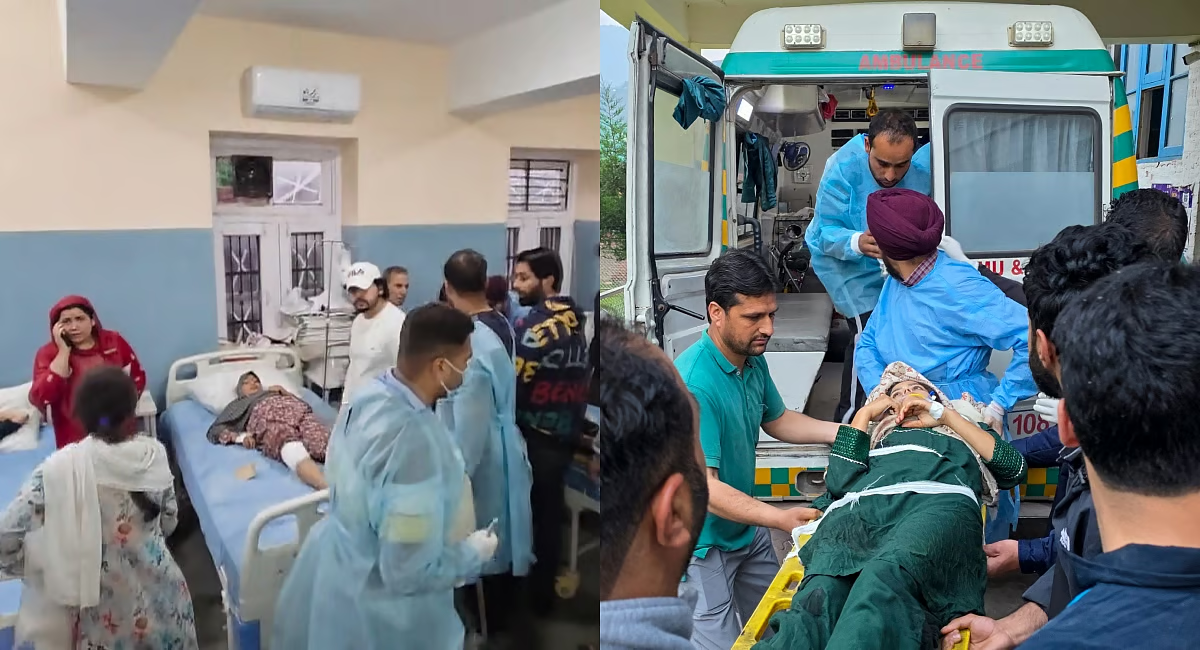
13 Dead in Pakistan: Following India’s targeted missile strikes on nine terrorist camps in Pakistan and Pakistan-occupied Jammu and Kashmir, launched in response to the deadly Pahalgam attack that killed 26 people-violence along the Line of Control sharply escalated, with Pakistan retaliating through heavy shelling on Indian border villages, resulting in civilian and military casualties on both sides. What began as sporadic small arms fire quickly intensified into heavy artillery and mortar barrages, with Pakistan targeting civilian populations deep inside Indian territory. The result: at least 13–15 civilians dead, nearly 60 injured, widespread destruction, and a community gripped by fear not seen since the 1971 war.
The Night of Terror: Poonch and Beyond
Unprecedented Shelling
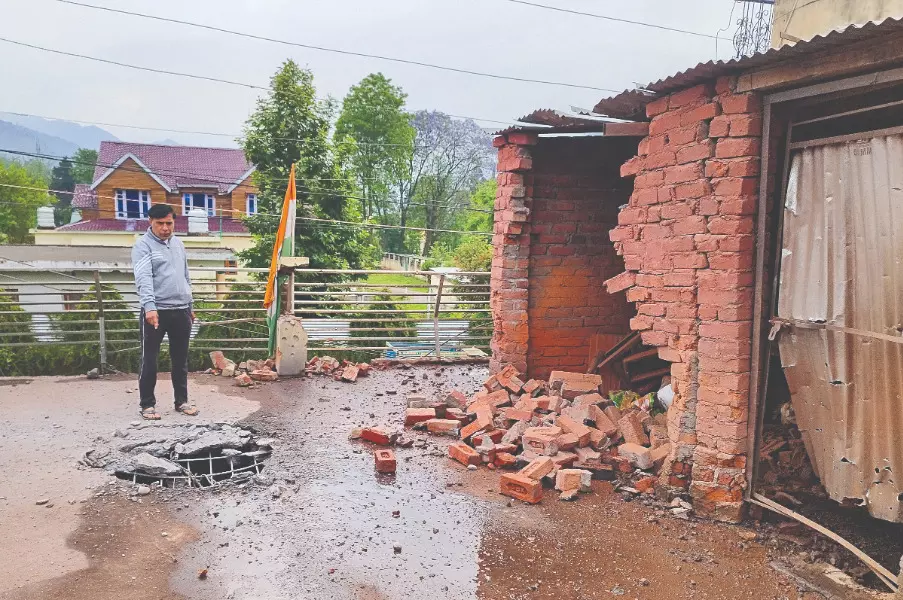
On the night of May 7, 2025, residents of Poonch and surrounding districts endured relentless shelling as Pakistani forces targeted homes, public spaces, religious sites, and government buildings. For many, it was a night of terror, with shells landing in residential neighborhoods for the first time in decades. The violence was so intense that even the usually resilient locals described it as a “war zone,” with the sounds of explosions echoing through the hills and cries for help filling the air.
“It felt like a battlefield, with the wounded crying out for assistance and families desperately seeking shelter. The destruction was visible all around,” shared Mohd Zahid, a resident of Poonch.
Civilian Casualties and Destruction
The Ministry of External Affairs and local officials confirmed that the brunt of the shelling was borne by civilians in Poonch. Among the dead were children, women, and members of both Sikh and Muslim communities. The tragedy was compounded by the fact that many were killed inside their own homes or while going about daily routines:
– Young lives lost: Siblings Zoya, aged 12, and Zain Khan, aged 10, tragically lost their lives when a shell hit their home in Kalani village.
– Seven-year-old Maryam Khatoon was killed in Qazi Mohalla, and 13-year-old Vihaan Bhargav died in Dungus village.
– Religious sites hit: Shells damaged the Shri Guru Singh Sabha Gurudwara, a mosque (killing a teacher inside), and Geeta Bhawan, highlighting the indiscriminate nature of the attack.
– Community leaders lost: Amreek Singh (55), who sang hymns at religious gatherings, and Ranjit Singh (48) died at Syndicate Chowk. Amarjeet Singh (47), Mohd Akram (40), Shakeela Bi (40), and others also lost their lives.
– Widespread injuries: Nearly 60 people were wounded, many critically, with hospitals in Jammu and Poonch overwhelmed by the influx of casualties.
Mass Displacement and Panic
The violence forced hundreds to flee their homes. More than 150 residents from Dhaki alone moved in with relatives after their houses were damaged. The local administration set up shelters in Chandak, Lassana, Sanai, and Sathra to accommodate those displaced. Videos circulated on social media showed families carrying children and elderly members to safety in the dead of night, while fire service teams battled blazes sparked by exploding shells.
“We never anticipated facing such a crisis in the middle of the night. We were fortunate to escape the shelling, so it seemed wise to relocate to a safer area for the time being,” remarked Khurshid Ahmad from Dhaki.
Damage to Infrastructure
Shells fell close to the UN facility and the forest department offices in Poonch, resulting in significant destruction. Civilian structures such as houses, stores, vehicles, and community buildings were left devastated. The Gurudwara’s president, Narinder Singh, noted that while the main sanctum was safe, doors and windows were shattered by the blasts.
The Broader Impact
Schools, Airports, and Public Life Disrupted
Authorities ordered the closure of schools and colleges in five border districts- Jammu, Samba, Kathua, Rajouri, and Poonch- citing security concerns. Airports in Jammu, Srinagar, and Leh suspended operations, and flights were canceled or diverted, stranding travelers and adding to the chaos.
Community Solidarity and Grief
In the face of fear and tragedy, the community came together. Young people gathered at hospitals to offer blood donations for the wounded, while religious and political figures urged for peace and assistance for those affected. The Shiromani Akali Dal called for recognition and compensation for the families of the victims of the Gurudwara attack, highlighting the solidarity of the Sikh community with the country’s military forces.
Military and Government Response
Indian Army’s Countermeasures
The Indian Army responded with what officials described as “proportionate force,” targeting Pakistani positions responsible for the shelling. Several Pakistani posts were reportedly destroyed, and multiple casualties were inflicted in retaliation. The Army announced the loss of Lance Naik Dinesh Kumar from the 5 Field Regiment, who lost his life while engaged in combat during the shelling.
“The General Officer Commanding and all members of the White Knight Corps honor the ultimate sacrifice of Lance Naik Dinesh Kumar from the 5 Field Regiment, who gave his life on May 7 during the shelling by the Pakistan Army. We also express our support for all those affected by the deliberate attacks on innocent civilians in the Poonch sector,” stated the 16 Corps of the Indian Army.
High-Level Meetings and Political Reactions
Chief Minister Omar Abdullah held an emergency meeting to review the situation, while Defence Minister Rajnath Singh praised the armed forces for their valor during Operation Sindoor and assured the public that the government was monitoring the situation closely. Former DGP S P Vaid and other leaders condemned Pakistan for targeting civilians and called for strong diplomatic and military responses.
The Context: Operation Sindoor and Its Fallout
Trigger for Escalation
The shelling came just hours after India’s Operation Sindoor, a high-precision military offensive targeting nine terror camps in Pakistan and PoJK. These strikes were in response to the April 22 terror attack in Pahalgam, which killed 26 civilians. The Indian government stated that only terrorist infrastructure was targeted, but Pakistan retaliated by indiscriminately shelling civilian areas along the LoC.
A New Level of Escalation
While cross-border firing is not new to the region, the intensity and depth of this shelling-reaching deep into Poonch town and hitting residential and religious sites-marked a significant and alarming escalation. Locals and officials alike said they had not witnessed such violence since the 1971 war.
“It is for the first time after the 1971 war that such intense and unabated shelling has been conducted. They are targeting the entire city… deep inside. It started around 1.30 am last night and has only intensified,” said Narinder Singh, president of the Poonch Gurudwara Committee.
Human Stories: Loss, Survival, and Resilience
The shelling did not discriminate. Hindu, Sikh, and Muslim families all suffered losses. Children died in their sleep, shopkeepers were killed at work, and a teacher died in a mosque. Survivors recounted harrowing escapes and the trauma of losing loved ones in an instant.
“When there’s shelling, it doesn’t discriminate between a Hindu, a Sikh, or a Muslim. A Muslim teacher in our area also died today,” said Narinder Singh.
Many residents, especially those with family in safer cities, began leaving Poonch. The fear is palpable, and the scars-physical and emotional-will last long after the shelling stops.
A Community Under Siege
The recent cross-border shelling in Jammu and Kashmir, especially in Poonch, stands as one of the deadliest escalations in years. Triggered by India’s targeted strikes on terror camps, Pakistan’s response has inflicted a heavy toll on civilians, destroyed homes and places of worship, and shattered the sense of security for thousands.
As the Indian Army continues to respond and the government works to provide relief and restore calm, the people of Poonch and neighboring districts are left to pick up the pieces. Their stories of loss, courage, and resilience are a stark reminder of the human cost of conflict- and the urgent need for peace along one of the world’s most volatile borders.
Key Facts at a Glance:
– At least 13–15 civilians killed, nearly 60 injured in Poonch due to Pakistani shelling.
– Shells struck homes, religious sites, and public buildings for the first time since 1971.
– Hundreds displaced; schools and airports closed; mass panic and destruction reported.
– The Indian Army retaliated, destroying several Pakistani posts.
– The violence followed India’s Operation Sindoor, which targeted nine terror camps in Pakistan and PoJK.
MUST READ: 9 Terror Camps Were Targeted: India’s Operation Sindoor